Cute Bunny & Squirrel Line Art: Graphics for Brands
As a brand designer who has spent years refining visual identities for local businesses, I approach every new graphic design asset with a critical eye. It is not just about whether an image looks "cute"; it is about whether it can carry the weight of a brand's story on a physical product label or a digital banner. Recently, I evaluated the Cute Bunny and Squirrel Line Art Flowers collection for a potential project involving a small-batch, organic skincare line targeting young families. My initial impression was immediate: this asset strikes a delicate balance between playful charm and rustic simplicity, making it a potent tool for small business branding.
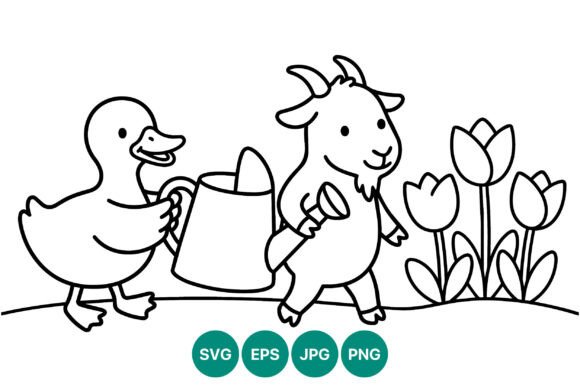
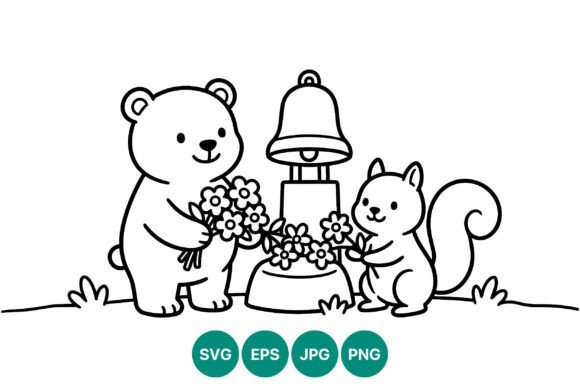
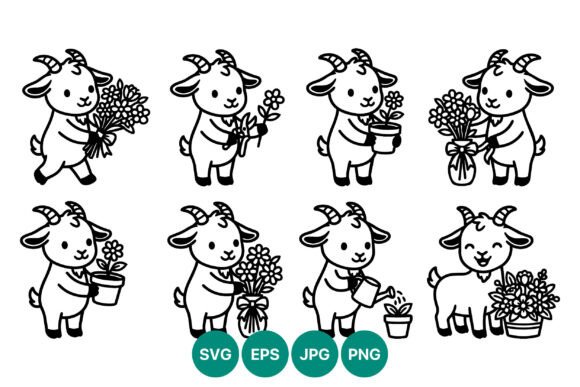
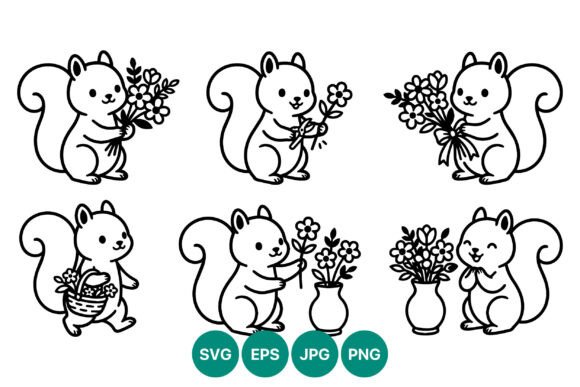
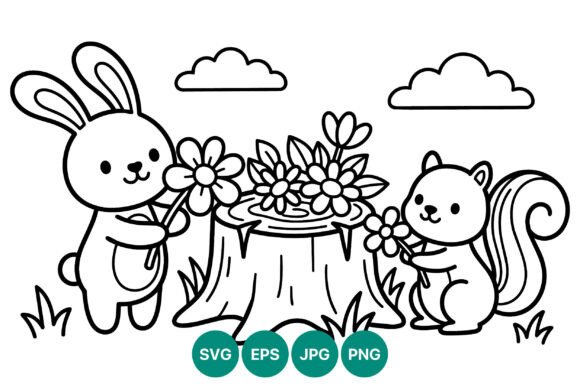
The core of this collection features black and white line art depicting a cute bunny and a squirrel holding flowers near a tree stump, surrounded by additional flora and whimsical clouds in a simple cartoon style. While the description sounds straightforward, the execution offers significant versatility. The line weight is consistent enough to feel professional yet loose enough to retain a handmade aesthetic. For a local business owner, particularly those in the handmade or food sectors, this mood is invaluable. It suggests a brand personality that is friendly, approachable, and deeply connected to nature without feeling overly corporate or sterile.
Transforming Local Products with Whimsical Identity
In the context of packaging design, these illustrations shine when used to create an emotional connection before the customer even reads the ingredients. Imagine a honey jar from a local apiary or a bag of artisanal coffee beans. Placing the bunny and squirrel duo on the front label instantly communicates warmth. It tells the consumer that this product was crafted with care, likely by human hands rather than a faceless machine. This is crucial for handmade business owners who need to justify a premium price point through perceived value and storytelling.
The utility of this asset extends far beyond the primary label. In my review, I visualized these graphics as decorative elements on hang tags, thank-you cards included in shipment boxes, and even as watermarks on tissue paper wrapping. For a boutique store selling children's clothing or nursery decor, these images could serve as the hero graphic on a website banner or a seasonal social media campaign. Because the style is inherently nostalgic yet modern, it fits perfectly within current trends favoring "cottagecore" aesthetics and eco-friendly branding.
Strategic Applications for Marketing and Presentation
When integrating Cute Bunny and Squirrel Line Art Flowers into a broader brand identity, the goal is to strengthen the visual hierarchy. These elements should not compete with critical information but rather frame it. For instance, on a product menu for a family-friendly café, the squirrel and bunny could flank the header, drawing the eye downward to the offerings. On a flyer for a spring market event, they add a festive touch that signals a welcoming atmosphere.
The inclusion of SVG files in the download folder is a significant advantage for professional use. Unlike raster-only images, SVGs allow for infinite scalability without pixelation. This means a product mockup created for a large trade show banner will look just as crisp as a tiny icon on a mobile app. For designers working with Canva template workflows or vector-based software like Adobe Illustrator, this editability ensures the art can be recolored to match specific brand palettes or resized to fit awkward packaging dimensions.
Navigating Design Constraints and Best Practices
However, no design asset is a one-size-fits-all solution. There are scenarios where Cute Bunny and Squirrel Line Art Flowers should be used with caution. For luxury minimalist brands that rely on vast negative space and ultra-thin typography, this cartoon style might feel too busy or informal. Similarly, on very small labels where legal text and ingredient lists are dense, adding complex illustrative elements can clutter the layout and reduce readability. It is essential to maintain clear visual separation between the decorative art and mandatory regulatory information.
Furthermore, while the black and white nature of the line art offers high contrast, care must be taken when placing it on low-contrast backgrounds. A light gray background might cause the thinner lines of the clouds or flower petals to disappear, diminishing the professional quality of the marketing visuals. Always test the asset on the actual material stock—whether it is kraft paper, glossy plastic, or matte cardstock—to ensure the ink absorption does not blur the fine details.
Practical Notes for the Professional Designer
Before finalizing any client work with these design assets, I recommend a rigorous testing phase. First, verify the commercial license to ensure it covers physical product sales and unlimited print runs, which is standard for most items on a creative marketplace but always worth double-checking. Next, experiment with typography pairings. This specific illustration style pairs beautifully with handwritten fonts that mimic personal notes, as well as rounded sans-serif fonts that echo the soft curves of the animals. Avoid overly rigid serif fonts that might clash with the playful energy of the squirrel and bunny.
Finally, consider the color strategy. While the original files are black and white, do not be afraid to introduce color during the logo design or layout phase. A soft pastel background behind the line art can enhance the "springtime" feel, while a deep forest green can ground the image for a more earthy, organic brand vibe. By treating these illustrations as flexible components rather than static images, you can elevate a simple digital product into a cornerstone of a memorable professional branding campaign.
Ultimately, the Cute Bunny and Squirrel Line Art Flowers collection is more than just clipart; it is a narrative device. For the right local business, it provides the visual shorthand needed to communicate kindness, nature, and quality. Whether applied to a soap wrapper, a bakery box, or an Instagram story, these graphics have the power to turn a generic commodity into a beloved brand staple.